
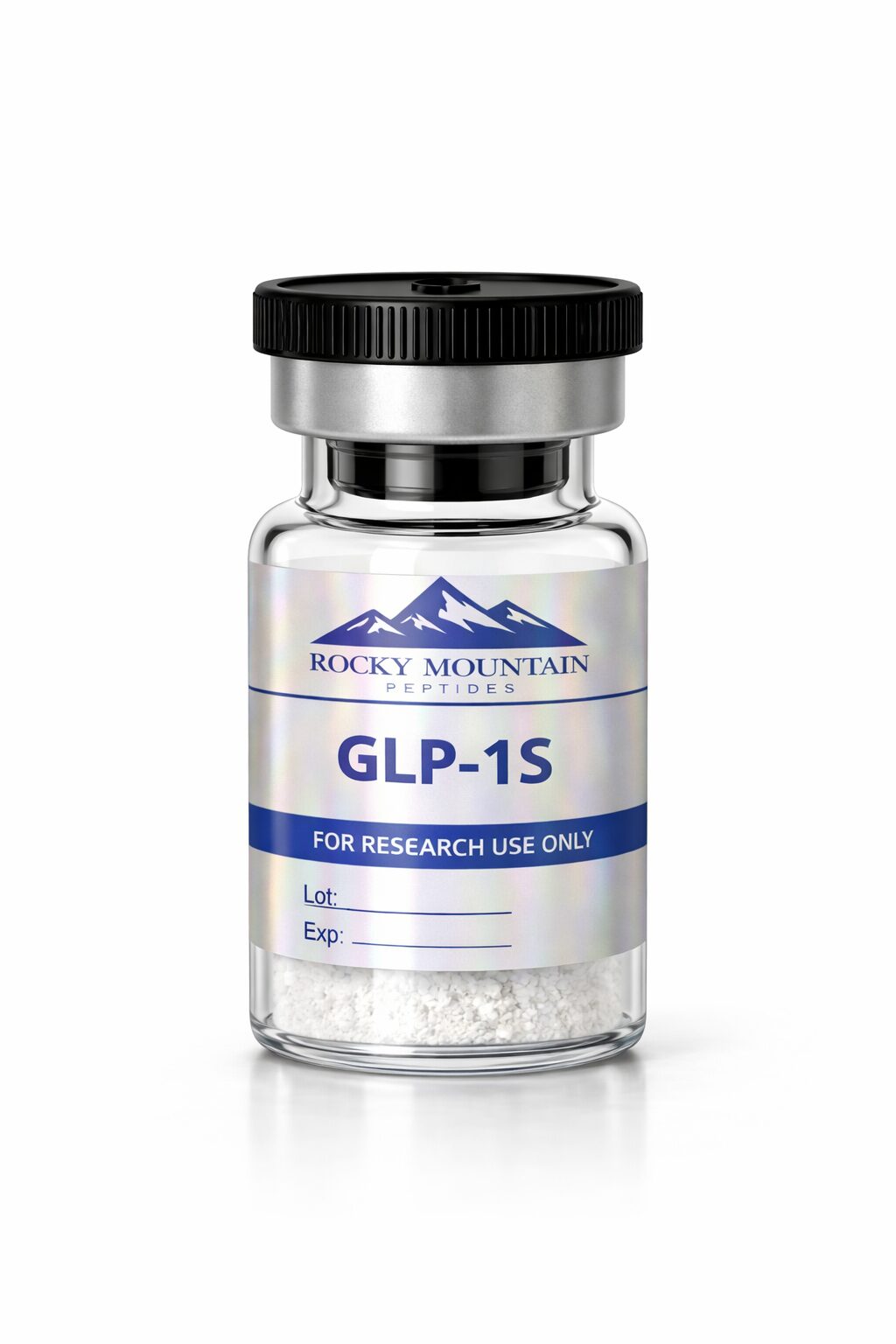
$29.99 – $39.99Price range: $29.99 through $39.99
GLP-1S is a GLP-1 receptor agonist studied for its influence on metabolic signaling, appetite regulation, and insulin response. Research explores its role in modulating glucose uptake, energy balance, and endocrine function through peptide-mediated pathways.
All products sold on this website are intended for research and identification purposes only and are not intended for human dosing, injections, or ingestion. These products are not FDA-approved to diagnose, treat, cure, or prevent any disease. By purchasing, you certify they will be used solely for legitimate laboratory research and not for human or animal consumption.
GLP-1S is a synthetic peptide analog of glucagon-like peptide-1 (GLP-1) that is structurally modified for extended activity. It is studied in laboratory and preclinical models for its ability to activate GLP-1 receptors, regulate insulin signaling, and modulate cellular pathways associated with glucose metabolism and endocrine regulation.
Research into GLP-1 biology began in the 1980s with the identification of its role in glucose regulation and endocrine signaling. Early synthetic GLP-1 receptor agonists demonstrated promise in extending receptor activation, but limited half-life restricted their utility. Semaglutide was later developed with structural modifications at specific amino acid positions to improve receptor binding and extend duration of action, making it a useful tool for studying incretin biology and metabolic pathways in research models.
GLP-1S has been studied in metabolic, endocrine, and cardiovascular models, with research highlighting its activity in glucose regulation, insulin secretion, and weight management pathways. Studies have also reported effects on lipid metabolism, appetite regulation, and cardiovascular outcomes in preclinical and clinical settings.
Key Areas of Research:
• Metabolic: glucose, insulin, energy balances
• Endocrine: GLP-1 signaling, hormone regulation
• Cardiovascular: lipid, cholesterol, outcomes
Together, these findings suggest broad experimental potential for Semaglutide across metabolic, endocrine, and cardiovascular pathways. By engaging GLP-1 signaling and influencing glucose and lipid metabolism, Semaglutide provides a versatile platform for research into metabolic regulation, cardiovascular health, and systemic resilience in laboratory models.
By accessing this website, you acknowledge and agree to the following:
All products sold on this site are intended strictly for laboratory research purposes only. These products are NOT for human consumption, medical use, or veterinary use.
By proceeding, you confirm that:
We do not make any claims regarding the safety, efficacy, or suitability of these products for any specific use.
Any misuse, improper handling, or use outside of intended research purposes is strictly prohibited and is the sole responsibility of the purchaser.